
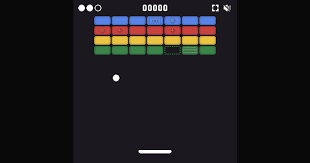
If you’ve ever searched for a quick mental break and stumbled upon google block breaker, you already know how deceptively simple this browser-based arcade game feels at first glance. Beneath the clean design and instant accessibility sits a surprisingly deep skill curve that rewards timing, precision, and strategic thinking. Many players plateau early because they treat the game like a casual time-waster rather than a performance challenge that can be mastered with deliberate practice. This guide reframes the experience, helping you approach each round with purpose and control.
As a subject-matter expert in casual game mechanics and performance optimization, I’ll walk you through professional-level techniques to elevate your results in google block breaker. You’ll learn how the physics model shapes ball trajectories, why paddle positioning matters more than reaction speed, and how pattern recognition can dramatically boost your clearing efficiency. Whether you’re chasing personal bests or simply want smoother, more satisfying runs, the strategies below will help you play smarter, not harder.
Understanding the Core Mechanics of Google Block Breaker
At its heart, google block breaker operates on deterministic physics rather than random outcomes, which means every ball rebound follows predictable rules. The angle of reflection is influenced by the contact point on the paddle, the speed of the ball, and the orientation of the surface it hits. Expert players internalize these mechanics to control trajectories intentionally, rather than reacting passively to where the ball happens to go. This shift in mindset is foundational: when you understand how each collision behaves, you can plan multi-hit sequences that clear clusters of blocks efficiently.
Another critical mechanic is how the game handles momentum and acceleration over time. As rounds progress, ball speed often increases subtly, reducing your reaction window and magnifying small positioning errors. Professionals prepare for this by adopting proactive paddle placement instead of chasing the ball at the last second. Learning to anticipate the next rebound path allows you to stabilize rallies even at higher speeds. Mastery begins with respecting the system’s consistency and using it to your advantage.
Optimizing Paddle Control and Positioning
Paddle control is the single most important skill differentiator in google block breaker, yet most players undertrain it. Instead of hovering the paddle under the ball, advanced players position the paddle slightly offset from the ball’s projected landing point. This deliberate misalignment changes the rebound angle, enabling controlled targeting of specific block clusters. Over time, this technique transforms the paddle from a defensive tool into an offensive instrument that directs the ball exactly where you want it to go.
Equally important is minimizing unnecessary paddle movement. Excessive lateral motion increases the chance of mistiming contact, especially as ball speed increases. Professionals use micro-adjustments—short, precise movements that fine-tune position without disrupting rhythm. This reduces cognitive load and conserves focus for strategic decisions. By practicing stillness and intentional placement, you build a calmer, more repeatable control style that performs reliably under pressure.
Mastering Ball Trajectories for Strategic Clearing
Controlling ball trajectories is the gateway to high-efficiency clearing in google block breaker. The contact point on the paddle determines whether the ball travels in a shallow or steep arc, and each arc has a tactical purpose. Shallow angles are ideal for sweeping long horizontal rows of blocks, while steeper angles excel at breaking through vertical stacks or hard-to-reach corners. Professionals switch between these trajectories dynamically, depending on the board layout and remaining targets.
Strategic clearing also means avoiding random bounces that waste time and increase risk. When the ball becomes trapped in narrow vertical loops, it may take several rebounds to break free, slowing progress and increasing the chance of a missed return. Skilled players intentionally break these loops by adjusting paddle contact to redirect the ball into open spaces. This keeps momentum flowing and maintains consistent pressure on remaining blocks, accelerating level completion.
Reading Block Patterns and Prioritizing Targets
Every arrangement in google block breaker contains hidden patterns that dictate the most efficient clearing order. Rather than attacking blocks randomly, expert players scan the board to identify structural weak points. These are often junctions where multiple rows intersect or isolated clusters that, once removed, open larger pathways for the ball to travel freely. Clearing these areas early reduces future complexity and increases the likelihood of long, uninterrupted scoring runs.
Target prioritization also affects risk management. Blocks near the edges and corners tend to trap the ball in awkward rebound cycles if left too long. By removing these early, you reduce unpredictable trajectories later in the round. Professionals think two or three hits ahead, anticipating how each cleared block will alter the board’s geometry. This forward-looking approach transforms each strike into a calculated move rather than a hopeful attempt.
Timing, Rhythm, and Flow State in Gameplay
High-level performance in google block breaker depends as much on rhythm as it does on mechanics. Once you internalize the game’s pacing, you can synchronize paddle movements with the ball’s cadence, creating a smooth flow state. This rhythm reduces reaction latency because your body begins to anticipate motion patterns subconsciously. Elite players often describe this as “playing ahead of the ball,” where decisions feel intuitive rather than reactive.
Flow state also improves consistency under pressure. As speed increases, conscious overthinking can cause hesitation and misalignment. By training rhythm through repeated sessions, you build procedural memory that handles routine interactions automatically. This frees mental bandwidth for strategic adjustments, such as target prioritization and trajectory shaping. The result is steadier performance across long sessions, even as difficulty scales.
Avoiding Common Mistakes That Limit Performance
One of the most common mistakes in google block breaker is chasing the ball instead of controlling space. When players react late and slide the paddle frantically, they introduce unnecessary variability into rebounds. This reactive style often leads to shallow angles that trap the ball in repetitive loops or send it toward low-value targets. Professionals avoid this by anchoring the paddle in predicted landing zones, letting the ball come to them with minimal adjustment.
Another limiting habit is tunnel vision on immediate hits rather than long-term board control. Clearing a single block might feel satisfying, but it can be strategically inefficient if it doesn’t open new pathways. Skilled players resist impulsive hits and instead choose contacts that reshape the board in their favor. By recognizing and correcting these habits, you replace short-term reactions with deliberate, performance-oriented decision-making.
Training Methods to Build Consistent High Scores
Deliberate practice is essential for mastering google block breaker at a professional level. Instead of playing endless casual rounds, structure your sessions around specific skills. For example, dedicate one session to mastering shallow-angle sweeps and another to precise corner targeting. This focused approach accelerates learning by isolating variables and reinforcing successful patterns. Tracking your outcomes helps you identify which techniques yield measurable improvements.
Consistency also comes from warm-up routines that prime your timing and coordination. Spend the first few minutes of each session playing conservatively, focusing on clean rebounds and stable paddle positioning. This reduces early mistakes and establishes rhythm before difficulty ramps up. Over time, these routines build reliable muscle memory, making high scores a byproduct of disciplined preparation rather than luck.
Leveraging Browser Performance and Input Precision
Because google block breaker runs in a browser environment, performance variables can subtly affect outcomes. Input lag, frame drops, or background processes can introduce micro-delays that disrupt timing at higher speeds. Professional players optimize their setup by closing unnecessary tabs, ensuring stable internet connections, and using responsive input devices. Even small improvements in responsiveness can compound into noticeably smoother control over long sessions.
Input precision also benefits from ergonomic positioning. A comfortable mouse or trackpad grip reduces tension and improves fine motor control, especially during prolonged play. Experts treat their physical setup as part of their performance toolkit, just like athletes tune their equipment. By minimizing technical friction, you ensure that your skill, not your setup, determines your results in google block breaker.
Advanced Mental Models for Competitive Play
Expert players approach google block breaker with mental models that frame each round as a solvable system rather than a chaotic arcade challenge. One effective model is viewing the board as a network of pathways, where each cleared block expands future options. This perspective encourages moves that maximize future mobility instead of short-term gains. Over time, you develop an intuitive sense for which strikes create the most strategic leverage.
Another advanced model treats mistakes as data points rather than failures. When a rally ends unexpectedly, professionals analyze what positional choice led to the unfavorable rebound. This reflective habit accelerates improvement by converting losses into actionable insights. By adopting these mental frameworks, you cultivate a growth-oriented mindset that sustains long-term mastery and keeps performance improving.
Conclusion: Playing Google Block Breaker Like a Pro
Mastering google block breaker is less about raw reflexes and more about informed control, strategic foresight, and disciplined practice. By understanding the underlying physics, refining paddle positioning, and shaping ball trajectories intentionally, you gain agency over each rally. Pattern recognition, rhythm, and smart target prioritization further compound your efficiency, turning chaotic boards into manageable systems.
