
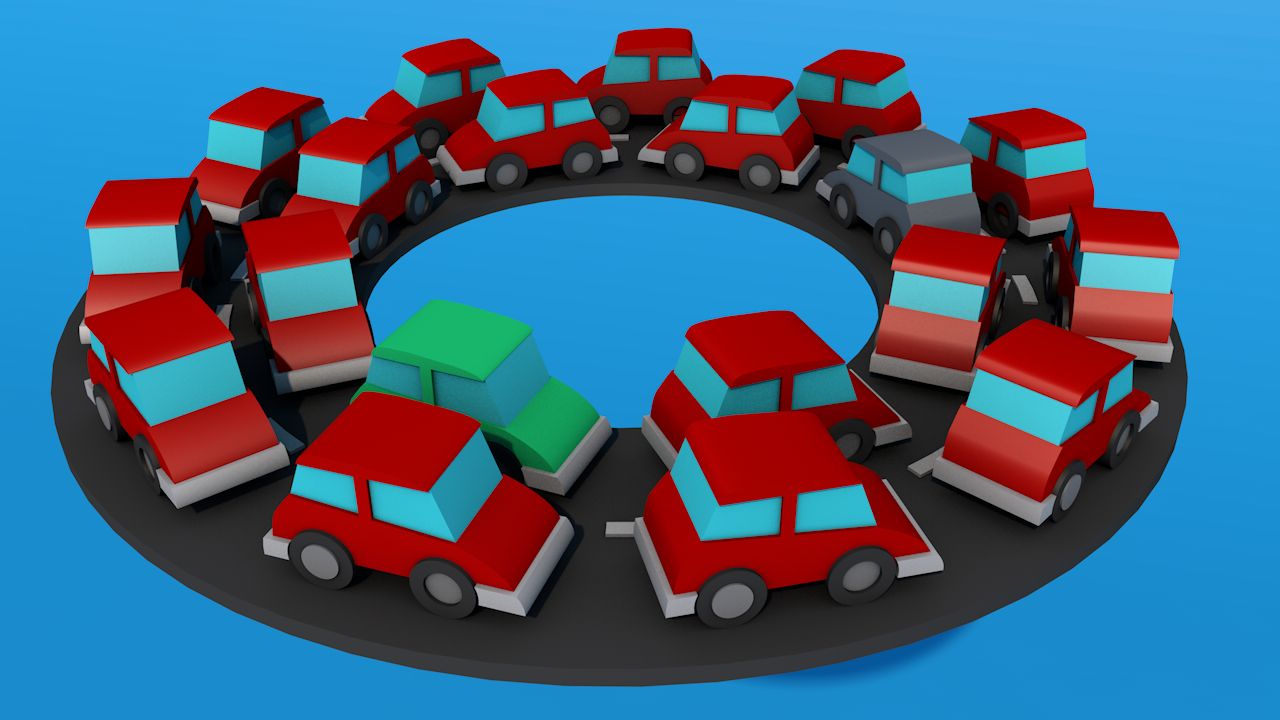
Introduction: Why Traffic Jam 3D Is More Than Just a Casual Puzzle Game
If you’ve ever wished you could take your love for problem-solving and turn it into a strangely satisfying digital experience, Traffic Jam 3D is the game you’ve been waiting for. At first glance, it looks like a simple puzzle title where you slide cars around and try to free a blocked vehicle from a congested grid. But instantly, you notice something interesting: the game tests not only your patience but also your ability to think ahead like a true strategist. Traffic Jam 3D isn’t just about moving one car; it’s about predicting a whole chain of movements before making your first move.
In many ways, Traffic Jam 3D mirrors the chaos of real-life traffic situations. There are moments when you believe everything is under control, but one wrong move sends the whole sequence into disarray. That’s part of the thrill—it keeps your mind sharp and pushes you to develop the kind of mental discipline that comes naturally to precision drivers. So yes, the game may look casual, but it has layers of complexity that make it genuinely rewarding.
What really makes Traffic Jam 3D enjoyable is its ability to evolve with you. As you progress through levels, the puzzles grow more dynamic and unpredictable. Cars pile up in tighter formations. The margin for error shrinks. The number of moves becomes limited. All of these elements force you to refine your strategy and approach each challenge differently. It becomes less of a pastime and more of a mental workout that keeps you coming back.
Understanding the Mechanics of Traffic Jam 3D
Every good precision driver understands their machine before hitting the track. In Traffic Jam 3D, the same principle applies: mastering the mechanics is key to improving your gameplay. The game revolves around moving cars positioned on a board that’s usually crowded and narrow. Each car can only move in the direction it is facing, which makes even the simplest level more challenging than it appears at first glance. You’re not just dragging objects around; you’re unlocking a path through strategic movements.
A core mechanic of the game is spatial awareness. You need to visualize how the grid will look several moves ahead. If you fail to consider this, you may find your escape vehicle stuck behind a wall of cars you accidentally boxed in. That’s why understanding directions, grid constraints, and the general flow of vehicle placement is so important. Every decision you make impacts the next five moves, so you can’t afford to shuffle cars blindly.
Another important detail is recognizing patterns. Over time, the game subtly teaches you to identify shapes and layouts that appear frequently. You’ll start to notice similar congested clusters repeated across levels, which makes it easier to solve them once you’ve learned how to dismantle them. The further you advance, the more you rely on pattern-based problem solving, and that’s exactly what separates beginners from expert Traffic Jam 3D players.
Developing the Right Strategy: How Precision Drivers Approach Complex Levels
One thing you’ll quickly learn is that Traffic Jam 3D is never about rushing. Precision driving in the real world requires focus, stability, and zero impulsiveness, and that same mindset applies perfectly here. The moment you begin making random moves, the puzzle becomes exponentially harder. You need a method, and more importantly, the patience to stick to that method even when the puzzle feels impossible.
A powerful strategy is to start by freeing up as much space as possible before attempting to move the main vehicle. The game might tempt you into targeting the escape route early on, but this often leads to unnecessary complications. Instead, begin by identifying the cars that create the most blockage. These vehicles may not seem directly relevant at first, but clearing them out early opens up a chain reaction of opportunities.
Another expert-level strategy involves reverse-engineering. This means taking a moment to look at the final path your escape vehicle needs to take and working backward from that point. Precision drivers use this technique all the time when analyzing tight parking maneuvers or calculating their path through traffic. In Traffic Jam 3D, reverse engineering allows you to uncover hidden obstacles and understand which vehicles can stay in place without affecting the final route.
Level Progression: Why Each Stage Feels Like a Completely New Challenge
Traffic Jam 3D does a fantastic job of keeping the gameplay fresh by introducing different puzzle designs as you level up. The first few stages ease you into the system with straightforward traffic arrangements. But once the game senses your growing confidence, it begins throwing in tightly woven grids filled with oversized vehicles and fewer escape paths. Suddenly, each move becomes more intimidating, and that’s exactly how the developers intended it.
One thing that stands out is the game’s ability to increase difficulty without feeling repetitive. Even though the basic mechanics stay the same, the layouts and constraints vary so much that each level feels like an entirely new challenge. You might encounter a stage where only one or two vehicles actually need to be moved, but figuring out which ones is where the complexity lies. Other times, you’ll find yourself rearranging nearly everything on the board just to free a single car.
The pacing of the difficulty curve also deserves praise. It builds confidence early on, challenges you in the middle stages, and pushes your limits toward the end. This makes progression feel meaningful and keeps players hooked. Much like real-world precision driving, you’re constantly tested on your ability to adapt, react, and stay calm under pressure.
The Importance of Efficiency: How to Reduce Your Move Count Like a Pro
Smart Traffic Jam 3D players quickly realize that solving a puzzle is one thing, but solving it with the fewest moves is an entirely different skill set. Efficiency is what separates casual players from precision-driven experts. The game tracks your moves, and reducing your counts becomes a game inside the game. It’s a puzzle within a puzzle, and it demands ultra-sharp focus.
One technique for improving efficiency is to avoid unnecessary shuffling. Many players instinctively move every car just to create more space, but this actually works against you. Unneeded movements add to your total count and can also make the puzzle more confusing. Instead, only move vehicles that directly help create the escape route or clear critical blockages.
Another pro-efficient strategy is practicing “short-term sacrifices for long-term gains.” Occasionally, you may need to make a move that appears counterproductive—like blocking the main path temporarily—to free a larger vehicle that will significantly reduce the number of future moves you need. This is exactly how real drivers perform tight maneuvers in heavy traffic: sometimes reversing a foot creates just enough space to avoid a bigger collision.
Tips and Tricks to Strengthen Your Traffic Jam 3D Gameplay
If you’re aiming to elevate your Traffic Jam 3D performance, there are several expert-level tips that can make your gameplay smoother and more rewarding. First, take your time to analyze the grid before making your first move. Don’t get tricked by simple-looking puzzles because even the easiest ones can hide surprisingly complex solutions beneath the surface.
Next, master the art of controlling the edge lanes. Vehicles positioned at the edges usually hold the key to creating early space. When you learn to manipulate these outer lanes efficiently, you gain a massive advantage because they often determine how much breathing room you’ll have in the later steps. Think of them as the “pressure valves” of the puzzle.
Lastly, don’t hesitate to reset a level if your moves start spiraling out of control. There’s no shame in a clean restart. In fact, starting over gives you a fresh perspective and helps you avoid the clutter that builds up after too many missteps. Even expert drivers sometimes realign themselves before taking on a tricky maneuver, and you should do the same in Traffic Jam 3D.
Why Traffic Jam 3D Feels So Addictive
It’s no secret that Traffic Jam 3D is addictive in the best way possible. Something about its simple design mixed with deep strategic thinking makes it incredibly hard to put down. Each level feels like a personal challenge, and when you finally solve a tough puzzle, you get a rush of satisfaction that keeps you chasing the next victory.
A big part of the game’s addictive charm comes from its feedback loop. The game rewards you instantly for solving a puzzle, boosts your confidence, and then nudges you into the next challenge before you even realize you’re hooked. It’s the same principle behind classic puzzle games, but Traffic Jam 3D adds that extra layer of realism due to its vehicle-based mechanics.
Another reason players get addicted is because the game allows constant improvement. No matter how skilled you become, there’s always room to push your efficiency further. Whether you’re reducing your move count or optimizing your strategies, Traffic Jam 3D always gives you something new to chase. Growth is built into the gameplay, and that’s what makes it thrilling.
Conclusion: Becoming a Precision Driver in Traffic Jam 3D
Traffic Jam 3D might look like a simple puzzle game, but once you dive deep into its mechanics and understand the mindset it demands, you realize it’s practically a training ground for strategic thinking. Every move matters. Every decision shapes the next. And every puzzle challenges you to rise beyond your comfort zone. That’s why precision drivers—and players who love a good mental workout—are drawn to it.
As you continue improving, you’ll start noticing that your ability to anticipate movements, make efficient decisions, and stay calm under pressure grows stronger. These are exactly the traits that define expert Traffic Jam 3D players. So whether you’re playing casually or striving to become a true master of the grid, this game will keep sharpening your skills one puzzle at a time
